
Background
Major retinal diseases such as neovascular age-related macular degeneration (nAMD), diabetic macular edema (DME), diabetic retinopathy (DR), and retinal vein occlusion (RVO) are leading causes of vision loss globally, often requiring long-term monitoring and treatment1.
Understanding which patients will respond to specific therapies, and how retinal structure and function evolve over time, is crucial for optimizing care and designing more efficient clinical trials.
AI models are increasingly being used to analyze multimodal ophthalmic imaging, such as OCT and fundus photography, alongside clinical data to identify novel biomarkers, stratify patients, and predict treatment response2.
Objective
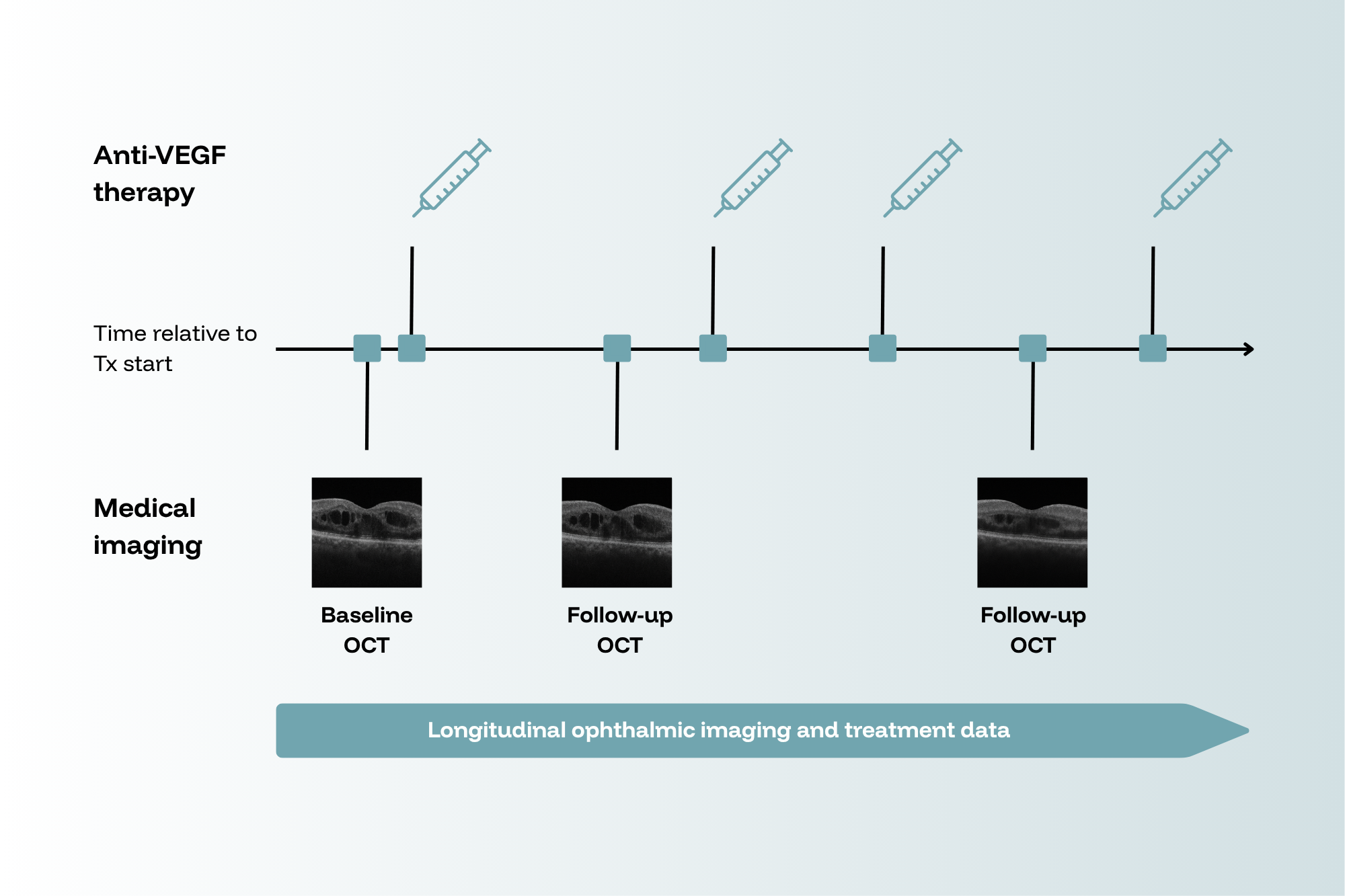
A global pharmaceutical company engaged Aigora to obtain real-world, longitudinal ophthalmic imaging data to power AI-based biomarker discovery and treatment-response assessment across key retinal indications, including nAMD, DME, DR, and RVO.
Delivery
Aigora curated and delivered a comprehensive multimodal ophthalmic imaging dataset with multi-year follow-up to support AI development, validation, and downstream research applications in ophthalmology.