Accelerating AI-driven breast cancer screening with globally diverse, pathology-confirmed mammography datasets

Oncology
Breast Cancer
Mammography
AI Development
AI Validation
Regulatory Evidence Generation
Imaging Data
Clinical Data
Pathology Data

Background

Breast cancer remains one of the most common malignancies worldwide, and screening programs play a central role in detecting disease at earlier, more treatable stages1.

AI is increasingly used to support radiologists by highlighting subtle findings, reducing false negatives, and improving reading efficiency in screening workflows2.

Newer AI approaches in this field often integrate multimodal data to deliver more precise, context-aware risk and diagnostic assessments3.

Objective

A U.S.-based medical technology company partnered with Aigora to obtain geographically diverse, pathology-confirmed imaging datasets to support the development, validation, and FDA clearance of multiple AI-enabled breast cancer screening algorithms.

Delivery

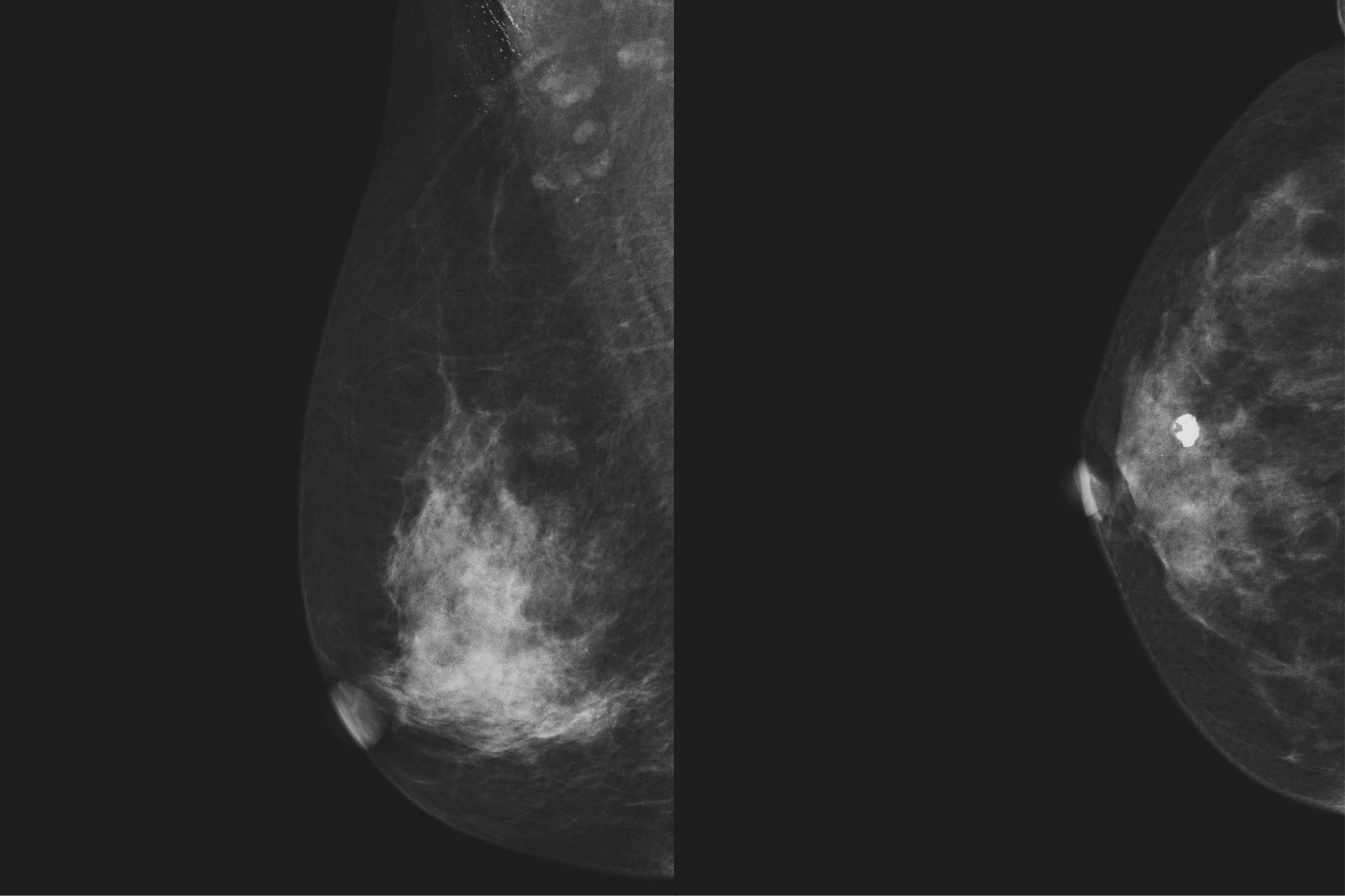
Aigora curated and delivered globally sourced, regulatory-grade mammography datasets with diagnoses confirmed through pathology or long-term imaging follow-up.

Dataset characteristics

  • Medical imaging

    2D mammography and 3D tomosynthesis images, acquisition protocols, device manufacturer and model

  • Clinical data

    Patient demographics, laterality, breast density, BI-RADS score, and two-year imaging stability for benign cases

  • Pathology data

    Histopathologic diagnosis and cancer subtype

References

  1. Kim J, Harper A, McCormack V, et al. Global patterns and trends in breast cancer incidence and mortality across 185 countries. Nat Med. 2025;31(4):1154-1162. doi:10.1038/s41591-025-03502-3
  2. Ali A, Alghamdi M, Marzuki SS, et al. Exploring AI Approaches for Breast Cancer Detection and Diagnosis: A Review Article. Breast Cancer (Dove Med Press). 2025;17:927-947. doi:10.2147/BCTT.S550307
  3. Doan LMT, Shahhosseini K, Verma S, et al. Bridging modalities with AI: a review of AI advances in multimodal biomedical imaging. Commun Eng. 2026;5(1):30. doi:10.1038/s44172-026-00602-x
Project metrics
  • Number of cases

    1,000+
  • Number of variables per case

    7
  • Delivery timeline

    8 weeks

More case studies

See all

Enabling AI-driven research in retinal diseases with longitudinal ophthalmic imaging data

Ophthalmology
Biomarker Discovery
Treatment Response Assessment
Multimodal Imaging Data
Clinical Data
Read case study