
Background
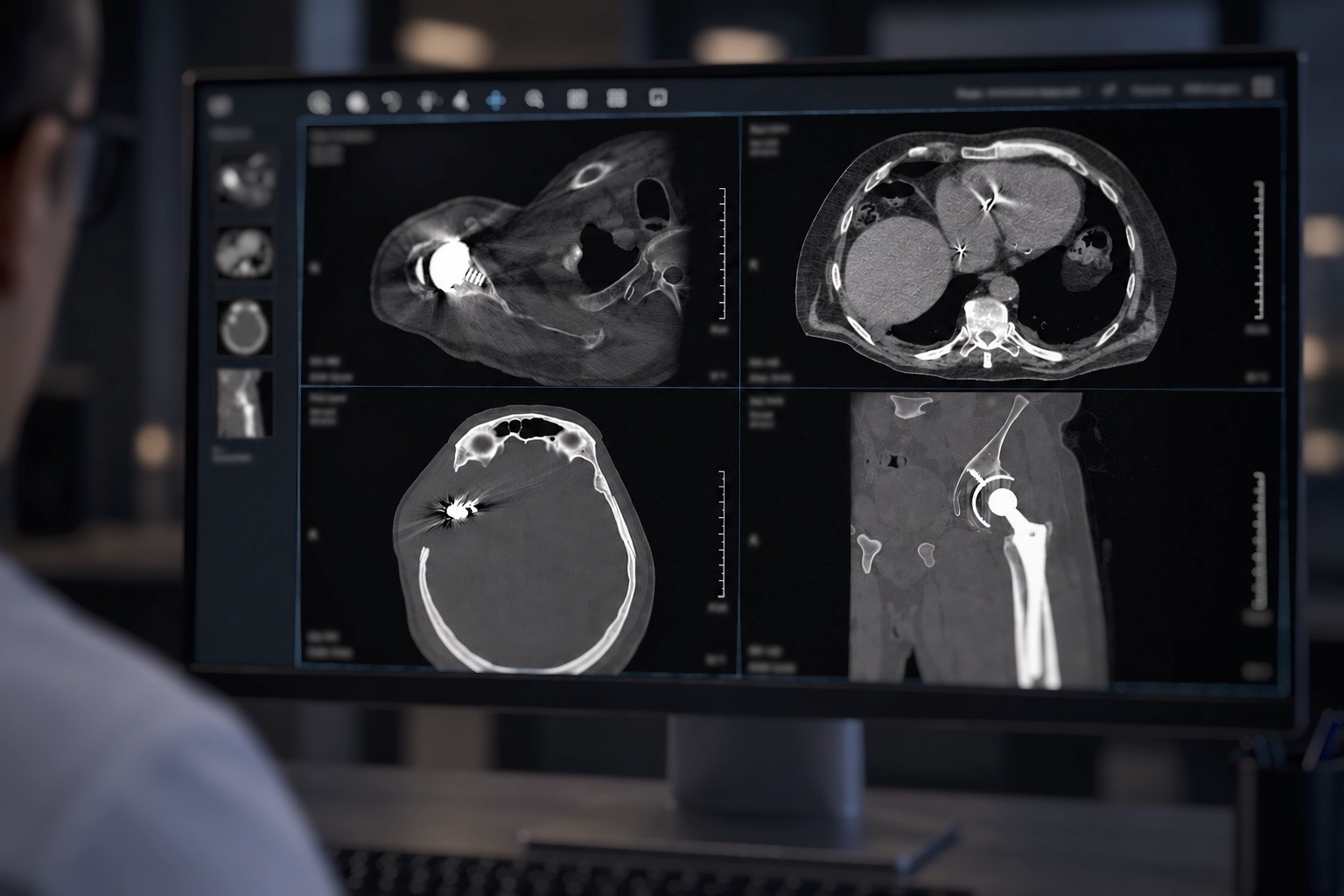
Metal implants can generate artifacts on CT scans, obscuring surrounding anatomy and degrading diagnostic quality1.
This challenge spans multiple implant categories, including orthopedic, dental, cardiovascular, spinal, and neurovascular devices, requiring effective metal artifact reduction techniques for reliable image interpretation.
The development of robust AI-based metal artifact reduction (MAR) algorithms requires well-characterized CT datasets that reflect real-world diversity in implant types, scanners, and acquisition protocols while meeting strict technical specifications.
Objective
A top-five global medtech company engaged Aigora to curate a tailored CT dataset supporting the development and validation of an AI-based MAR algorithm.
Delivery
Aigora delivered the dataset through a multi-stage curation process that identified eligible CT studies across its network, validated imaging and reconstruction parameters, manually classified implant types, and prepared the dataset for downstream AI algorithm development.